

Similes give us a way to talk about the nature versus nurture debate without getting lost in academic jargon. Instead of arguing percentages or citing twin studies, you can show how innate traits and environmental influences interact through familiar comparisons. The similes below are organized by theme so you can find the right image for your context—whether you are writing a college essay, explaining child development to parents, or crafting a character backstory in fiction.
What Is a Simile?
A simile is a figure of speech that compares two different things using the words “like” or “as.” It creates an immediate mental picture by linking an abstract concept to something concrete and sensory. For instance, saying someone is “stubborn as a mule” tells you more about their demeanor than simply calling them “obstinate.”
It is useful to distinguish this from a metaphor, which asserts that one thing is another (e.g., “time is a thief”). A simile maintains the distinction between the two elements while highlighting their similarity. In discussions about human development, similes are particularly effective because they allow us to visualize the interplay between biology and experience without reducing either to a simple label.
The Garden: Growth and Potential
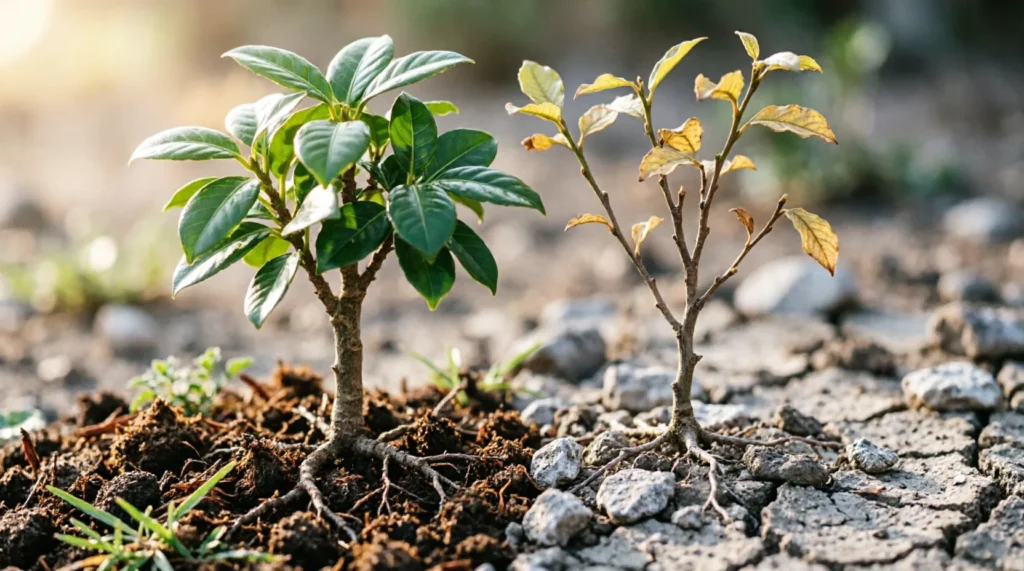
The garden analogy is perhaps the most enduring image in developmental psychology. It suggests that while we may start with certain seeds, the soil, weather, and care determine what actually blooms. These similes emphasize potential, cultivation, and the necessity of external support.
- “Like a seed in rocky soil” — “His talent was like a seed in rocky soil, struggling to find purchase despite its inherent strength.” (resilient but hindered)
- Craft note: This works because it immediately establishes conflict. The reader understands that the potential is there, but the environment is actively working against it.
- “As dependent on rain as a flower” — “Her confidence grew as dependent on rain as a flower, wilting without consistent encouragement.” (vulnerable, needs consistency)
- “Like a vine climbing a trellis” — “His moral compass developed like a vine climbing a trellis, needing structure to grow upward rather than sprawling wildly.” (needs guidance)
- “As shaped by pruning as a bonsai tree” — “Her discipline was as shaped by pruning as a bonsai tree, carefully trimmed over years to achieve its final form.” (intentional, gradual)
- Craft note: I often tell students to avoid generic plant metaphors unless they specify the type of plant. A bonsai implies meticulous, long-term care, whereas a weed implies neglect. Specificity adds authority.
- “Like roots seeking water” — “His curiosity spread like roots seeking water, finding cracks in even the driest curriculum.” (persistent, innate drive)
- “As vulnerable to frost as a tropical orchid” — “Her sensitivity was as vulnerable to frost as a tropical orchid, thriving only in warm, supportive environments.” (delicate, context-specific)
- “Like a wildflower in a manicured lawn” — “His creativity stood out like a wildflower in a manicured lawn, unexpected and slightly unruly.” (nonconformist, natural)
- “As nourished by sunlight as a sunflower” — “The child’s joy was as nourished by sunlight as a sunflower, turning instinctively toward praise.” (responsive, positive)
The Clay: Molding and Form
If the garden emphasizes growth, the clay metaphor emphasizes malleability and the imprint of the maker. These similes are useful when discussing early childhood, education, or the lasting impact of trauma and training. They suggest that the material has limits, but the shape is largely determined by external hands.
- “Like wet clay on a wheel” — “Her personality was still like wet clay on a wheel, spinning and shifting under the pressure of new experiences.” (fluid, impressionable)
- “As imprinted as a fingerprint in wax” — “The memory was as imprinted as a fingerprint in wax, clear and permanent despite the passage of time.” (lasting, detailed)
- “Like stone carved by wind” — “His patience was like stone carved by wind, slowly eroded by years of minor irritations.” (gradual change, wear)
- Craft note: This simile is stronger than “worn down” because it invokes a natural force. It suggests that the change wasn’t malicious, just inevitable. That nuance is crucial for empathetic character development.
- “As pliable as warm plastic” — “Teenagers’ opinions are as pliable as warm plastic, easily reshaped by peer pressure before cooling into rigidity.” (temporary flexibility)
- “Like a mold casting metal” — “The military training acted like a mold casting metal, forcing individual quirks into a uniform shape.” (rigid, transformative)
- “As cracked as dried mud” — “Their trust was as cracked as dried mud, fragmented by years of broken promises.” (damaged, fragile)
- “Like a pot fired in a kiln” — “Her resilience was like a pot fired in a kiln, hardened and set by intense heat.” (strengthened by adversity)
- “As smooth as polished marble” — “His demeanor was as smooth as polished marble, cool and unyielding to the touch.” (composed, distant)
The Recipe: Ingredients and Process
Cooking metaphors are excellent for explaining how distinct elements combine to create a unique result. They help clarify that neither nature nor nurture acts alone; it is the combination and the method of preparation that matter. These are particularly effective in popular science writing or parenting blogs.
- “Like flour in a cake” — “Genetics provided the flour in the cake, essential but bland without the sugar of experience.” (foundational, incomplete alone)
- “As mixed as ingredients in a stew” — “His temperament was as mixed as ingredients in a stew, simmering together until individual flavors blended.” (complex, integrated)
- “Like yeast rising in dough” — “Her ambition rose like yeast in dough, expanding naturally when given warmth and time.” (organic growth)
- “As seasoned as a slow-cooked broth” — “Wisdom is as seasoned as a slow-cooked broth, deepening only with prolonged exposure to life’s heat.” (matured, rich)
- Craft note: Avoid clichés like “recipe for success.” Instead, focus on the chemical or physical process. Yeast rising is active; broth seasoning is passive. Choose the verb that matches the trait you are describing.
- “Like salt enhancing flavor” — “Education acted like salt enhancing flavor, bringing out the best in his innate abilities.” (amplifying, essential)
- “As burnt as overcooked toast” — “The opportunity was as burnt as overcooked toast, ruined by too much pressure applied too quickly.” (ruined by excess)
- “Like a spice blend unique to a region” — “Her accent was like a spice blend unique to a region, unmistakably tied to her origins.” (cultural, identifying)
- “As layered as a lasagna” — “His identity was as layered as a lasagna, with distinct strata of family history and personal choice.” (complex, structured)
The River: Flow and Channel
Water metaphors capture the dynamic, ever-changing aspect of human development. They suggest that while the source (nature) is fixed, the path (nurture) can be diverted, dammed, or widened. These similes are poetic and work well in literary essays or reflective pieces.
- “Like a river carving a canyon” — “Habit formed like a river carving a canyon, slowly cutting a deep path through repeated action.” (persistent, shaping)
- “As directed as water in a pipe” — “His career path was as directed as water in a pipe, flowing efficiently but with little room for deviation.” (constrained, efficient)
- “Like a stream joining a larger current” — “She felt like a stream joining a larger current, losing her individual identity in the broader culture.” (assimilating, overwhelmed)
- “As turbulent as whitewater rapids” — “Adolescence was as turbulent as whitewater rapids, chaotic and dangerous but ultimately passing.” (chaotic, temporary)
- Craft note: Turbulence implies energy and danger, but also movement. It is a better choice than “stormy” for developmental phases because it suggests forward motion despite the chaos.
- “Like a dam holding back floodwaters” — “His repression was like a dam holding back floodwaters, sturdy but under immense pressure.” (contained, risky)
- “As meandering as a lazy bend” — “Her progress was as meandering as a lazy bend, taking the longest route but eventually reaching the sea.” (slow, inevitable)
- “Like ice melting in spring” — “His reserve broke like ice melting in spring, gradually revealing the flow beneath.” (thawing, natural transition)
- “As deep as an underground aquifer” — “Her knowledge was as deep as an underground aquifer, unseen but sustaining everything above.” (hidden, essential)
The Tapestry: Weaving and Pattern
Textile metaphors emphasize complexity, interconnection, and the idea that the final picture is only visible from a distance. They are useful when discussing heritage, family dynamics, or the integration of multiple influences over a lifetime.
- “Like threads woven into cloth” — “Trauma and triumph were like threads woven into cloth, inseparable in the final fabric.” (integrated, permanent)
- “As knotted as a tangled skein” — “His thoughts were as knotted as a tangled skein, requiring patience to unravel.” (confused, complex)
- “Like a pattern emerging from loom” — “Her character developed like a pattern emerging from loom, only becoming clear after many passes.” (gradual revelation)
- “As frayed as an old rope” — “Their relationship was as frayed as an old rope, holding together by only a few remaining strands.” (weak, nearing break)
- “Like embroidery adding detail” — “Education was like embroidery adding detail, decorating the base fabric of innate intelligence.” (enhancing, decorative)
- Craft note: Be careful with textile metaphors not to imply that nurture is merely “decoration.” Use “embroidery” only when the base trait is already strong. If the base is weak, use “patchwork” instead.
- “As tight as a drumhead” — “The family’s expectations were as tight as a drumhead, resonating with every small mistake.” (tense, responsive)
- “Like a quilt made of scraps” — “His identity was like a quilt made of scraps, pieced together from diverse cultural influences.” (composite, resourceful)
- “As interlaced as basket weave” — “Nature and nurture were as interlaced as basket weave, each strand supporting the other’s structure.” (mutually dependent)
How to Write Your Own Nature vs. Nurture Simile
Creating a fresh comparison requires moving beyond the obvious. Here is a simple three-step process I use in my workshops to help students generate original imagery.
- Identify the core dynamic. Is the trait innate or learned? Is it changing or static? Is it resistant or receptive? For example, if you are describing a learned skill that feels natural, the dynamic is “integration.”
- Choose a concrete domain. Pick a physical process that mirrors that dynamic. Cooking, construction, weather, and mechanics are rich sources. Avoid abstract domains like “feelings” or “ideas.”
- Test for sensory resonance. Read the simile aloud. Does it evoke a sight, sound, or texture? If it feels flat, add a specific detail. Instead of “like a machine,” try “like a clockwork gear clicking into place.”
Worked Example:
- Dynamic: A child’s innate shyness being gently overcome by a supportive teacher.
- Domain: Gardening (specifically, acclimatizing a plant).
- Draft: “His confidence grew like a houseplant moved outdoors.”
- Refinement: “His confidence unfolded like a fern unfurling in morning light, tentative at first but steady once warmed.”
Frequently Asked Questions
Why use similes instead of direct explanation in scientific writing? Similes bridge the gap between complex data and human understanding. While they should not replace data in peer-reviewed journals, they are invaluable in introductions, public-facing articles, and educational materials where engagement is as important as accuracy. They help readers retain information by anchoring abstract concepts in sensory memory.
Are nature vs. nurture similes considered clichés? Some are. Comparisons like “blank slate” or “genetic lottery” are so overused they have lost their impact. To avoid cliché, focus on specific mechanisms rather than general outcomes. Instead of saying “genes are the blueprint,” describe how genes act like “the foundation of a house, determining the footprint but not the interior design.” Specificity rescues a metaphor from banality.
Can similes oversimplify the science? Yes, if used carelessly. A simile is a tool for illustration, not proof. Always ensure the comparison highlights the intended aspect without implying false equivalence. For example, comparing the brain to a computer is useful for discussing processing speed but misleading for discussing emotion. Acknowledge the limits of the comparison if necessary.
Where can I learn more about the linguistic function of these comparisons? Understanding the broader category of figurative language helps refine your usage. According to Wikipedia’s entry on metaphor, these figures of speech are fundamental to human cognition, not just decorative flourishes. Similarly, the concept of nurture encompasses the vast array of environmental factors that these similes attempt to visualize. Studying these definitions provides a theoretical backbone to your creative choices.

Kenneth White is a seasoned linguist with over 15 years of experience in studying and teaching figurative language. He earned his Master’s degree in English Literature from Yale University, where he developed a deep interest in the art of similes and metaphors. His fascination with how similes enhance storytelling and evoke vivid imagery has been a guiding force throughout his career. Kenneth has conducted numerous workshops and seminars, educating students and fellow writers on effectively incorporating similes into their work. He has authored several papers detailing the evolution of simile usage across different literary periods. At SimileStation, Kenneth focuses on exploring the historical significance of similes and how they reflect cultural contexts. His articles dissect famous literary works, highlighting the creative use of figurative language to inspire emerging writers. Kenneth’s passion for language is as unwavering as a lighthouse in a storm, guiding readers through the complexities of simile construction and application.