

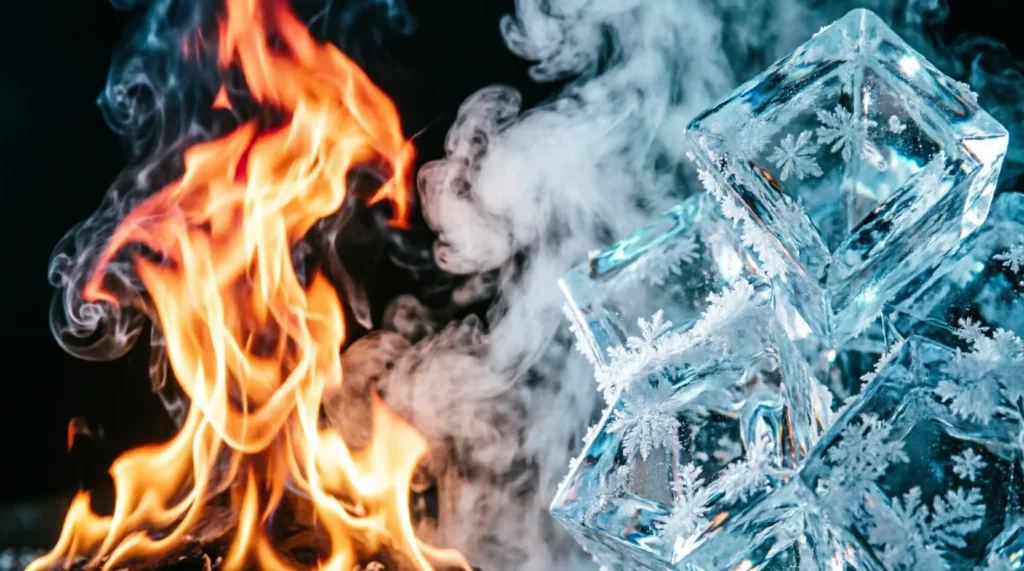
Similes for fire and ice help writers capture extreme states—whether describing a character’s rage, a frozen silence, or the stark beauty of nature. By comparing these elemental forces to familiar experiences, you give readers an immediate sensory anchor. The examples below are organized by theme so you can find the right intensity and tone for your specific scene, from gentle warmth to devastating cold.
What is a Simile?
A simile is a figure of speech that directly compares two different things using the words “like” or “as.” Unlike a metaphor, which asserts that one thing is another (e.g., “her anger was a wildfire”), a simile maintains the distinction between the subject and the comparison while highlighting a shared quality. According to Wikipedia, this explicit comparison allows for a nuanced exploration of similarities without collapsing the identity of the objects involved. While metaphors create identity, similes create connection, making them ideal for descriptive passages where clarity and vivid imagery are paramount.
Heat, Rage, and Destruction
Fire is rarely just about temperature; in literature, it often symbolizes uncontrolled emotion, danger, or transformative power. When you need to convey intensity, these similes bring the heat off the page.
- “burned like a forest fire” — “His criticism burned like a forest fire, consuming every argument I had prepared.” (devastating, uncontrollable)
- “hot as a blast furnace” — “The air in the courtroom was hot as a blast furnace, stifling any chance of calm discussion.” (oppressive, industrial intensity)
- “flared up like a gas leak” — “Her temper flared up like a gas leak, sudden and explosive with no warning.” (dangerous, unpredictable)
- “smoldered like wet wood” — “His resentment smoldered like wet wood, producing more smoke than flame but choking everyone nearby.” (lingering, irritating)
- “spread like wildfire” — “The rumor spread like wildfire through the small town, reaching every porch before noon.” (rapid, unstoppable)
- “glowed like embers in ash” — “Hope glowed like embers in ash, faint but still alive beneath the surface of his defeat.” (persistent, subtle)
- “raged like a house fire” — “The debate raged like a house fire, destroying relationships that had taken years to build.” (destructive, personal)
- “crackled like dry kindling” — “The tension crackled like dry kindling, ready to ignite at the slightest spark.” (anticipatory, fragile)
Craft Note: The simile “smoldered like wet wood” works because it appeals to multiple senses. It’s not just visual; it invokes the smell of acrid smoke and the feeling of irritation. My students often reach for “burned like fire,” which is redundant. Instead, specify the type of fire. A forest fire behaves differently than a candle flame, and your simile should reflect that specific behavior.
Cold, Silence, and Emotional Distance
Ice represents stasis, preservation, and often, emotional withdrawal. Use these comparisons when you want to describe a lack of movement, a chilling atmosphere, or a heart that has shut down.
- “cold as a glacier’s heart” — “Her apology was cold as a glacier’s heart, ancient and unmoving despite the sun beating down on it.” (unyielding, deep-seated)
- “froze like a pond in January” — “The conversation froze like a pond in January, trapping us in a silence we couldn’t break.” (still, isolating)
- “sharp as icicles” — “His words were sharp as icicles, designed to pierce rather than heal.” (painful, precise)
- “numb as frostbite” — “After the betrayal, she felt numb as frostbite, unable to sense the pain until it was too late.” (loss of sensation, delayed reaction)
- “slid away like ice on glass” — “His commitment slid away like ice on glass, smooth and impossible to hold onto.” (elusive, frictionless)
- “brittle as thin ice” — “Their truce was brittle as thin ice, cracking under the weight of a single question.” (fragile, dangerous)
- “chilled like a morgue drawer” — “The receptionist’s greeting chilled like a morgue drawer, professional but devoid of life.” (clinical, deadening)
- “hardened like permafrost” — “His opinions hardened like permafrost, unchanged by decades of new evidence.” (permanent, resistant)
Craft Note: Avoid the cliché “cold as ice.” It is so overused that readers’ eyes slide right over it. Instead, choose a specific type of ice or cold experience. “Frostbite” implies damage and loss of feeling, while “permafrost” implies something that has never thawed. This specificity adds emotional weight to the description.
Passion, Desire, and Warmth
Not all fire is destructive, and not all ice is hostile. Fire can represent passion, creativity, and comfort, while ice can signify clarity, purity, or refreshing calm. These similes explore the positive or seductive sides of these elements.
- “warm as a hearth fire” — “Her welcome was warm as a hearth fire, drawing me in from the storm outside.” (inviting, safe)
- “bright as a flare” — “His idea was bright as a flare, illuminating the dark problem instantly.” (clear, guiding)
- “intense as a kiln” — “Their focus was intense as a kiln, baking their project into something solid and lasting.” (productive, transformative)
- “cool as mint ice” — “Her demeanor was cool as mint ice, refreshing and clean in the midst of chaos.” (calming, crisp)
- “sparkled like fresh snow” — “The morning news sparkled like fresh snow, full of possibility and untouched by the day’s dirt.” (pure, new)
- “glowed like a candle” — “His kindness glowed like a candle, small but sufficient to light the room.” (gentle, steady)
- “refreshing as an ice cube” — “His honesty was refreshing as an ice cube in a warm drink, shocking but necessary.” (awakening, clarifying)
- “burned with a pilot light” — “Her ambition burned with a pilot light, always on, always ready to ignite the main burner.” (consistent, latent potential)
Craft Note: The simile “refreshing as an ice cube in a warm drink” works because it places the element in a context of relief. It’s not just cold; it’s needed. When writing positive similes for fire or ice, focus on the benefit the element provides to the observer. Does the fire warm you? Does the ice cool your fever? Anchor the comparison in the character’s physical or emotional relief.
Transformation and Duality
Sometimes, fire and ice appear together, representing conflict, balance, or change. These similes are useful for scenes where characters are torn between two extremes or where a situation is shifting rapidly.
- “mixed like oil and water” — “Their personalities mixed like oil and water, refusing to blend despite being in the same container.” (incompatible, separate)
- “shifted like melting ice” — “His loyalty shifted like melting ice, slowly turning into something fluid and unreliable.” (changing state, losing structure)
- “clashed like steam and frost” — “Their arguments clashed like steam and frost, creating a fog that obscured the truth.” (confusing, obstructive)
- “balanced like a flame in wind” — “Her patience was balanced like a flame in wind, flickering but not going out.” (precarious, resilient)
- “faded like smoke in cold air” — “His anger faded like smoke in cold air, dissipating quickly once the heat was gone.” (temporary, vanishing)
- “solidified like lava cooling” — “The decision solidified like lava cooling, becoming hard and immutable over time.” (final, heavy)
- “contrasted like sun on snow” — “Their moods contrasted like sun on snow, one bright and warm, the other blinding and cold.” (stark difference, visual)
According to Wikipedia, fire is a rapid oxidation process that releases heat and light, while ice is water frozen into a solid state. Understanding these physical properties helps you write more accurate similes. Fire consumes fuel; ice preserves structure. When you combine them in a simile, you are often describing a struggle between consumption and preservation, change and stasis.
How to Write Your Own Fire and Ice Simile
Creating a fresh simile requires moving beyond the obvious attributes of heat and cold. Follow these three steps to craft comparisons that feel original and precise.
- Identify the specific quality. Don’t just say “hot” or “cold.” Is the fire fast, slow, smoky, bright, or hungry? Is the ice sharp, slippery, clear, cloudy, or brittle? Pinpoint the exact trait you want to highlight.
- Find a concrete source. Look for real-world objects or experiences that share that specific trait. Instead of “fire,” think of a match, a volcano, a sunset, or a spicy pepper. Instead of “ice,” think of a windshield, a gemstone, a freezer burn, or a winter breath.
- Test the sensory impact. Read your simile aloud. Does it evoke a sound, smell, or touch? If it only creates a visual image, try to add another layer. For example, “quiet as snowfall” is visual and auditory, while “cold as steel” is tactile.
Worked Example:
- Weak: “He was angry like fire.”
- Step 1 (Quality): His anger was sudden, bright, and short-lived.
- Step 2 (Source): A camera flash.
- Step 3 (Sensory): Visual brightness and suddenness.
- Result: “His anger flashed like a camera bulb, blinding for a second before leaving the room darker than before.”
Frequently Asked Questions
What is the difference between a simile and a metaphor for fire and ice? A simile uses “like” or “as” to compare (e.g., “cold as ice”), while a metaphor states that one thing is the other (e.g., “he was ice”). Similes are often safer for descriptive clarity, while metaphors create stronger, more abstract identities.
Why should I avoid clichés like “cold as ice”? Clichés lose their impact because readers have encountered them too many times. They no longer trigger a sensory response. Using specific comparisons like “cold as a morgue drawer” or “cold as a glacier’s heart” forces the reader to visualize a unique scene, making your writing more memorable.
Can fire similes be used for positive emotions? Absolutely. Fire can represent passion, creativity, warmth, and energy. Similes like “warm as a hearth fire” or “bright as a flare” convey comfort and guidance rather than destruction. The context of the sentence determines whether the fire is threatening or welcoming.
How do I choose between fire and ice imagery? Consider the action you are describing. Fire is active, consuming, and changing. Use it for moments of rage, passion, or rapid transformation. Ice is passive, preserving, and static. Use it for moments of silence, grief, stubbornness, or clarity. If the character is moving, think fire. If they are stuck, think ice.

Kenneth White is a seasoned linguist with over 15 years of experience in studying and teaching figurative language. He earned his Master’s degree in English Literature from Yale University, where he developed a deep interest in the art of similes and metaphors. His fascination with how similes enhance storytelling and evoke vivid imagery has been a guiding force throughout his career. Kenneth has conducted numerous workshops and seminars, educating students and fellow writers on effectively incorporating similes into their work. He has authored several papers detailing the evolution of simile usage across different literary periods. At SimileStation, Kenneth focuses on exploring the historical significance of similes and how they reflect cultural contexts. His articles dissect famous literary works, highlighting the creative use of figurative language to inspire emerging writers. Kenneth’s passion for language is as unwavering as a lighthouse in a storm, guiding readers through the complexities of simile construction and application.