

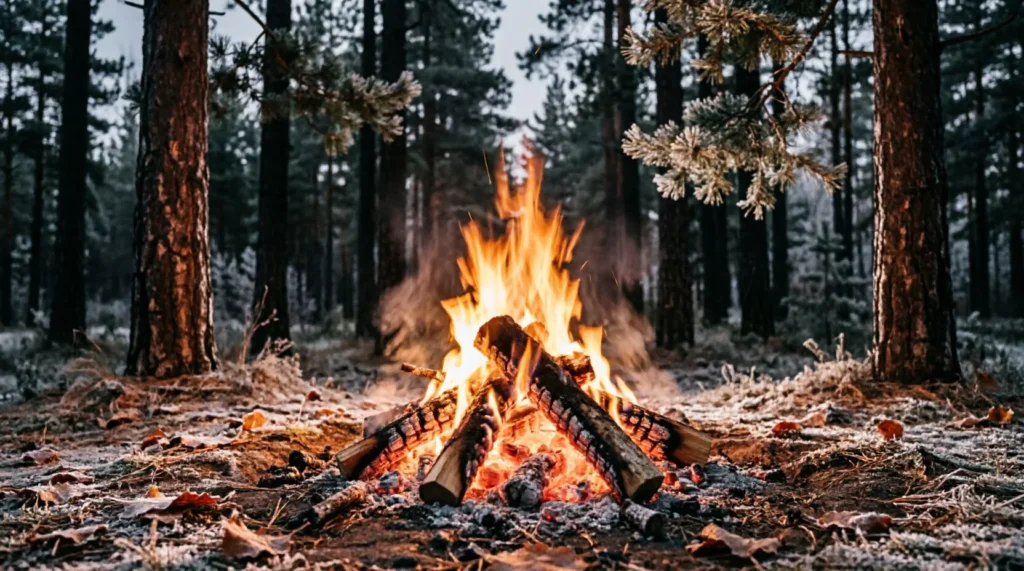
When my creative writing students ask me “what is a metaphor for fire,” they are usually trying to capture its raw heat, its sudden danger, or its comforting beauty. Whether you are drafting a college essay about a childhood campfire memory or writing a eulogy about a loved one’s burning passion, the similes and metaphors below will help you ignite your prose immediately.
What is a simile?
A simile is a figure of speech that directly compares two different things, usually by employing the words “like” or “as.” By linking a familiar sensation to an unexpected image, a simile forces the reader to experience a concept in a completely new way. As defined in literary studies, a metaphor asserts that one thing is another thing, whereas a simile merely suggests a resemblance, making the simile a gentler, more illustrative tool for descriptive writing Metaphor.
Similes for the Heat and Intensity of Fire
When you need to convey overwhelming temperature or volatile anger, you must reach for comparisons that carry physical weight. The version my students always reach for first is “hot as the sun,” which is entirely too vague for serious prose. Instead, look for machinery or environments that imply inescapable pressure.
- “as hot as a blast furnace” — “The midday sun beat down, and the city pavement was as hot as a blast furnace.” (overwhelming, oppressive). Craft note: The hard ‘f’ and ‘c’ sounds in furnace mimic the harshness of the industrial heat.
- “like a dragon’s breath” — “When he opened the commercial oven door, the wave of heat hit me like a dragon’s breath.” (mythic, dangerous).
- “as scorching as a branding iron” — “Her critique was as scorching as a branding iron, leaving permanent marks on his fragile ego.” (punitive, intense).
- “like a struck match” — “His temper flared like a struck match, sudden and blinding before burning out entirely.” (quick, volatile). Cliché warning: Skip “hot as hell” in formal writing; it is a tired phrase that tells the reader nothing about the specific quality of the heat.
- “as blistering as a desert noon” — “The editor’s notes were as blistering as a desert noon, offering no shade or mercy to the young author.” (relentless, harsh).
- “like liquid magma” — “The spicy curry burned through my throat like liquid magma, demanding a gallon of milk.” (visceral, painful).
Similes for the Beauty and Light of Fire
Fire is not just a destroyer; it is the original gatherer of humanity. When writing a memoir or a fantasy novel, you often need to describe the mesmerizing, comforting glow of a hearth or a lantern. This is where your vocabulary should shift from industrial to artistic.
- “like a captured star” — “The lantern swung from the low branch, glowing like a captured star in the deep woods.” (magical, comforting). Craft note: “Captured star” adds a mythic resonance that transforms a simple camping trip into a fairy-tale memory.
- “as bright as a freshly minted coin” — “The campfire sparks flew upward into the dark canopy, as bright as freshly minted coins.” (vivid, crisp).
- “like a dancer in gold” — “The flames leapt and twisted in the stone hearth like a dancer in gold.” (graceful, mesmerizing).
- “as warm as a mother’s embrace” — “After hours shoveling snow, the kitchen fire felt as warm as a mother’s embrace.” (nostalgic, safe).
- “like stained glass” — “The dying embers glowed in the ash pit like shattered stained glass.” (reverent, artistic).
- “as brilliant as a lighthouse beam” — “The signal fire burned on the high cliff, as brilliant as a lighthouse beam.” (hopeful, guiding). Historically, before electricity, massive fires were humanity’s primary method for sending vital signals across vast distances Fire.
Similes for Destruction and Danger
In thriller novels, song lyrics, or action sequences, fire is a monster. You want similes that evoke panic, speed, and an utter lack of control. Avoid comparing the fire to something passive; make it an active, hunting predator.
- “like a starving beast” — “The wildfire moved through the dry pines like a starving beast, consuming everything in its path.” (ravenous, terrifying).
- “as unforgiving as a judge’s gavel” — “The inferno was as unforgiving as a judge’s gavel, condemning the historic barn to ash.” (final, absolute).
- “like a runaway freight train” — “We could hear the brush fire coming like a runaway freight train, a low rumble shaking the earth beneath our boots.” (unstoppable, loud). Craft note: The auditory imagery bridges the gap between sound and sight, giving the reader a full-body experience of the approaching danger.
- “as merciless as a plague” — “The house fire spread through the tight neighborhood as merciless as a plague.” (devastating, tragic).
- “like a swarm of angry hornets” — “The orange sparks showered down on the dry thatched roof like a swarm of angry hornets.” (chaotic, stinging). Craft note: The sibilance and sharp consonants in “swarm” and “stinging” mimic the actual sound of popping embers.
- “as final as a closing casket” — “When the burning roof finally collapsed, the heavy thud was as final as a closing casket.” (grim, somber). This is a heavy simile, perfect for the tragic climax of a drama.
Similes for Passion, Inspiration, and Transformation
Finally, we use fire to describe the human spirit. A college admissions essay about overcoming adversity or a eulogy celebrating a vibrant life demands metaphors and similes that frame fire as a creative, refining force rather than a destructive one.
- “like a spark in dry tinder” — “The visiting professor’s lecture caught in my mind like a spark in dry tinder, changing my major overnight.” (inspiring, instantaneous).
- “as steady as a vigil candle” — “Her devotion to the charity was as steady as a vigil candle, burning quietly through the darkest political nights.” (resolute, enduring).
- “like a kiln firing clay” — “The rigorous marine training hardened the young recruits like a kiln firing clay.” (transformative, strengthening). Craft note: This simile works beautifully because it shifts fire from a destructive force to a creative, necessary one.
- “as contagious as a hearth fire” — “His booming laughter was as contagious as a hearth fire on a freezing night, drawing everyone closer.” (welcoming, magnetic).
- “like a forge in full swing” — “The veteran journalist’s mind was like a forge in full swing, hammering raw facts into sharp, undeniable prose.” (industrious, powerful).
- “as fierce as a blacksmith’s bellows” — “Her ambition pumped like a fierce blacksmith’s bellows, turning small dreams into roaring realities.” (driven, intense).
How to write your own fire simile
If you want to move beyond the lists above and craft your own original comparisons, follow this simple three-step workshop method I teach in my undergraduate seminars.
- Isolate the specific trait: Are you describing the heat, the crackling sound, the flickering light, or the rapid speed? Don’t just describe “fire”; describe the behavior of the fire.
- Find a surprising vehicle: Brainstorm nouns outside the realm of nature. Instead of comparing fire to the sun or a volcano, look at machinery, courtroom proceedings, or musical instruments.
- Ground it in a sensory detail: Add an adjective or a verb that ties the comparison back to the physical world.
Worked Example: Let’s say you are describing a large, noisy bonfire. A lazy writer might say, “The fire was loud like a jet engine.” Let’s apply the steps. We isolate the sound (cracking and roaring). We find a surprising vehicle (a collapsing glacier or a breaking ice shelf). We ground it in sensory detail.
Final Result: “The massive bonfire roared like a collapsing glacier, cracking and hissing violently in the damp night air.”
Frequently Asked Questions
What is a good metaphor for a person’s fiery personality? While a simile uses “like” or “as,” a metaphor states that the person is the fire. A strong metaphor for a passionate personality might be: “She was a hearth in the dead of winter, drawing everyone into her warmth.” Alternatively, for a destructive personality, you could write, “He was a grease fire in a cramped kitchen—impossible to contain and dangerous to approach.”
How do I avoid clichés when writing about fire? The fastest way to avoid clichés is to ban the words “sun,” “hell,” and “furnace” from your first draft. When you reach for a comparison, ask yourself if it is the first thing that came to mind. If it is, discard it. The first idea is almost always a cliché. Dig deeper into your personal experiences—think of specific smells, sounds, or childhood memories involving heat, and build your comparison from there.
Can I use fire similes for cold or sad scenes? Absolutely. In creative writing, juxtaposition is a powerful tool. Describing a freezing, lonely scene by referencing the absence of fire can be heartbreaking. For example: “The empty house was as cold as a hearth swept clean of ashes.” By invoking the memory of fire, you make the current coldness feel much more profound and isolating.
What is the difference between a metaphor and a simile in poetry? The mechanical difference is the use of “like” or “as.” However, the emotional difference lies in distance. A simile keeps the two objects slightly apart, asking the reader to admire the cleverness of the comparison. A metaphor collapses the distance entirely, demanding that the reader accept the transformation as absolute truth. In poetry, similes are often used for gentle, descriptive imagery, while metaphors are reserved for profound, thematic declarations.

Melissa Harris combines her background in creative writing with a keen analytical mind to bring a unique perspective on similes and figurative language. She holds a Bachelor of Arts in Creative Writing from the University of Iowa and a Ph.D. in Comparative Literature from Stanford University. Her love for the lyrical and the whimsical aspects of language drew her to specialize in figurative speeches, such as similes. With over a decade of experience as a writer and editor, Melissa is adept at breaking down complex figurative constructs into digestible insights for her audience. She is especially interested in the cognitive impact of similes in poetry and prose and enjoys experimenting with innovative approaches to simile creation in her writing. At SimileStation, Melissa contributes in-depth analysis pieces and creative exercises designed to spark imagination and refine readers’ use of similes. Her work inspires others to view language as an ever-evolving canvas, where words create a vivid tapestry of expression.