

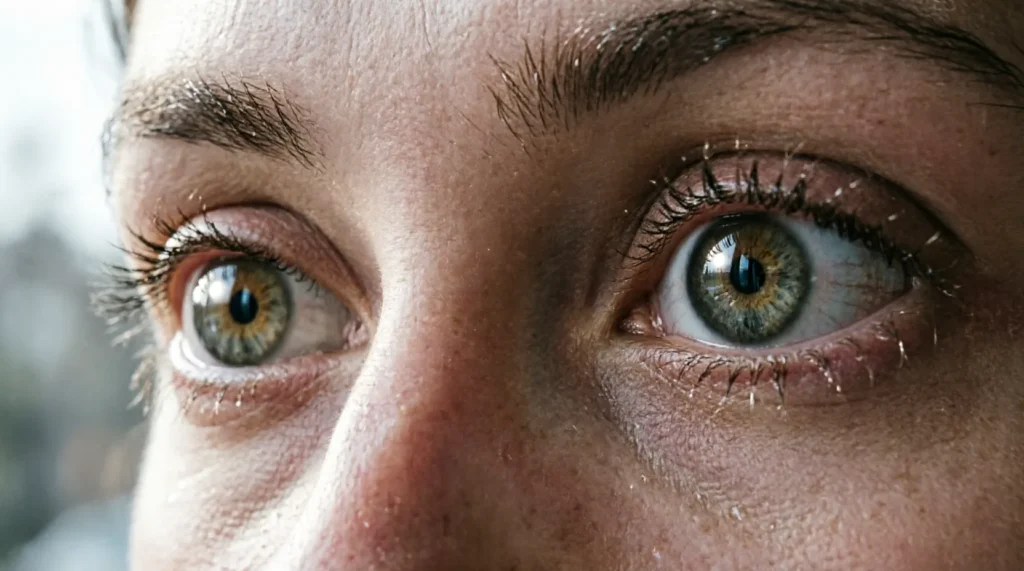
When a character’s eyes snap wide open, the moment carries weight. It signals a sudden shift in awareness—a gasp of surprise, a dawn of realization, or a freeze of terror. As a writing instructor who has critiqued countless drafts, I’ve seen writers struggle to move beyond the generic “her eyes were like saucers.” That phrase works, but it’s worn thin. To truly capture the intensity of that physical reaction, you need similes that evoke not just the shape of the eye, but the emotion behind the stare. The examples below are categorized by the specific feeling driving the widened gaze, giving you immediate, usable options for your next scene.
What Is a Simile?
Before we dive into the examples, let’s clarify the tool we’re using. A simile is a figure of speech that directly compares two different things using the words “like” or “as.” Unlike a metaphor, which states that one thing is another (e.g., “her eyes were moons”), a simile maintains the distinction between the subject and the comparison (e.g., “her eyes were like moons”). This subtle distance allows the reader to visualize the similarity while keeping the literal reality intact. For describing physical reactions like widened eyes, similes are particularly effective because they can bridge the gap between a biological reflex and an emotional state.
Similes for Shock and Sudden Surprise
These comparisons work best when the character has just received unexpected news or witnessed something unbelievable. The focus here is on the abruptness of the reaction and the sheer scale of the opening.
- “like dinner plates” — “His eyes went wide like dinner plates when he saw the bill.” (humorous, exaggerated)
- Craft note: This is a classic for a reason. It’s instantly recognizable and adds a touch of levity to a shocking moment. Use it when the tone allows for slight exaggeration.
- “as round as coins” — “She stared at the lottery ticket, her eyes as round as coins.” (focused, greedy)
- Craft note: The hardness of “coins” suggests a fixation on value or money. It’s a sharper, colder image than “plates.”
- “like headlights in the dark” — “The deer froze, its eyes like headlights in the dark.” (blinded, paralyzed)
- Craft note: This captures the dual nature of shock: the brightness of the stimulus and the inability to look away or move. It’s visceral and modern.
- “as wide as full moons” — “He looked up at the sky, his eyes as wide as full moons.” (awe-struck, vast)
- Craft note: Avoid this if you want grit; it’s poetic and soft. It works best for moments of wonder rather than fear.
- “like owl eyes in the night” — “Her eyes snapped open like owl eyes in the night.” (alert, predatory)
- Craft note: Owls suggest wisdom but also a silent, hunting vigilance. Use this when the character is suddenly on high alert.
- “as big as saucers” — “The child’s eyes were as big as saucers.” (childlike, innocent)
- Craft note: I advise my students to skip this one unless they are writing for very young audiences. It’s the most overused cliché in the book and rarely adds new texture to the scene.
- “like twin spotlights” — “His gaze locked on me, eyes like twin spotlights.” (intense, interrogating)
- Craft note: This implies the character is searching for truth or hiding nothing. It’s aggressive and direct.
- “as wide as open doors” — “Her eyes flew open as wide as open doors.” (inviting, vulnerable)
- Craft note: This suggests a lack of defense. The character is completely exposed to whatever they are seeing.
Similes for Fear and Terror
When fear takes hold, the eyes don’t just widen; they strain. These similes emphasize tension, fragility, and the instinct to take in as much visual information as possible before fleeing.
- “like a trapped animal’s” — “He backed into the corner, eyes wide like a trapped animal’s.” (primal, panicked)
- Craft note: This strips away civilization. It’s raw and effective for high-stakes thriller scenes.
- “as white-rimmed as cracked porcelain” — “Her eyes were wide, the whites showing as white-rimmed as cracked porcelain.” (fragile, breaking)
- Craft note: The mention of “cracked” adds a layer of impending disaster. It suggests the character is about to shatter emotionally.
- “like glass marbles ready to burst” — “His eyes bulged like glass marbles ready to burst.” (pressure, imminent explosion)
- Craft note: This conveys physical discomfort. It’s useful when the fear is so intense it feels physically painful.
- “as wide as a scream” — “Her eyes opened as wide as a scream.” (silent, visceral)
- Craft note: This is a synesthetic simile, mixing sight and sound. It’s powerful because it describes the volume of the silence.
- “like a deer in headlights” — “She stood frozen, eyes wide like a deer in headlights.” (paralyzed, helpless)
- Craft note: While common, this remains effective because it universally communicates the inability to process danger quickly enough.
- “as taut as drumskins” — “The skin around his eyes pulled tight, wide as taut drumskins.” (tension, vibration)
- Craft note: This focuses on the physical stretching of the eyelids. It’s a subtle, sensory detail that grounds the emotion in the body.
- “like voids swallowing the light” — “His eyes widened like voids swallowing the light.” (hollow, despairing)
- Craft note: This is for deep, existential fear. It’s less about panic and more about the absorption of horror.
- “as wide as a grave” — “She stared at the letter, her eyes as wide as a grave.” (final, deadly)
- Craft note: This implies that what she is seeing is a death sentence. It’s heavy and final.
Similes for Wonder and Awe
Not all widened eyes signal danger. Sometimes, they signal the breathtaking beauty of the world. These similes are softer, more expansive, and often draw from nature or light.
- “like twin pools of starlight” — “The child looked up, eyes wide like twin pools of starlight.” (magical, reflective)
- Craft note: This works beautifully in fantasy or lyrical prose. It suggests the character is reflecting the universe back at itself.
- “as bright as morning dew” — “Her eyes opened as bright as morning dew.” (fresh, new)
- Craft note: Use this for moments of discovery or first love. It’s clean and optimistic.
- “like windows thrown open to spring” — “His eyes widened like windows thrown open to spring.” (relief, freshness)
- Craft note: This implies a release of stale air. It’s perfect for a character who has been in the dark and finally sees hope.
- “as vast as the ocean horizon” — “She gazed at the sea, eyes as vast as the ocean horizon.” (endless, deep)
- Craft note: This suggests the character is taking in something too large to fully comprehend. It’s humble and respectful.
- “like polished gemstones” — “His eyes sparkled, wide like polished gemstones.” (precious, valuable)
- Craft note: This adds a sense of worth to the observation. The character values what they are seeing.
- “as clear as mountain air” — “Her eyes opened as clear as mountain air.” (pure, unclouded)
- Craft note: This is ideal for moments of clarity or truth. The confusion is gone, replaced by sharp vision.
- “like a camera lens focusing” — “His eyes widened like a camera lens focusing.” (analytical, precise)
- Craft note: This is great for detective stories or scientific contexts. It suggests the character is actively processing data.
- “as wide as a child’s first snowfall” — “They watched the parade, eyes as wide as a child’s first snowfall.” (innocent, joyful)
- Craft note: This evokes a specific memory of pure joy. It’s nostalgic and warm.
Similes for Realization and Epiphany
These similes describe the moment the pieces fall into place. The eyes widen not because of external shock, but because of internal understanding.
- “like a lightbulb flickering on” — “His eyes went wide like a lightbulb flickering on.” (sudden, electric)
- Craft note: A bit cliché, but universally understood. Use it only if you want immediate clarity without poetic flourish.
- “as sharp as a snapped twig” — “Her eyes widened as sharp as a snapped twig.” (abrupt, decisive)
- Craft note: The sound of a snapping twig is sudden and final. This simile captures the immediacy of the realization.
- “like a puzzle piece clicking home” — “His eyes opened like a puzzle piece clicking home.” (satisfying, complete)
- Craft note: This emphasizes the fit of the information. It’s less about shock and more about resolution.
- “as clear as a bell’s ring” — “Her eyes widened as clear as a bell’s ring.” (resonant, undeniable)
- Craft note: This suggests the truth is ringing out and cannot be ignored. It’s auditory and visual.
- “like a door unlocking” — “His eyes went wide like a door unlocking.” (access, entry)
- Craft note: This implies that a barrier has been removed. The character now has access to new knowledge.
- “as wide as an open book” — “She looked at him, eyes as wide as an open book.” (transparent, readable)
- Craft note: This suggests that the realization is visible to everyone. The character is no longer hiding their thoughts.
How to Write Your Own Eye Simile
Creating a fresh simile doesn’t require a thesaurus; it requires observation. Here is a simple three-step process I use in my workshops to help writers break free from clichés.
- Identify the Core Emotion: Is the character scared, amazed, or confused? Don’t just say “surprised.” Dig deeper. Is it the surprise of betrayal or the surprise of a gift?
- Find a Physical Object with That Same Quality: If the emotion is “sharp,” think of knives, ice, or glass. If it’s “soft,” think of clouds, water, or velvet. Look for objects that share the texture of the feeling.
- Connect with “Like” or “As”: Draft the comparison. Then, test it by reading it aloud. Does it trip off the tongue? Does it create an immediate image?
Worked Example:
- Emotion: Sudden, cold dread.
- Object: Ice forming on a windowpane.
- Simile: “His eyes widened like ice cracking across a winter lake.”
- Why it works: It captures the slow, inevitable spread of fear and the coldness of the realization.
Frequently Asked Questions
Why should I avoid using “eyes like saucers”? While it is a recognized idiom, it has lost its impact through overuse. Readers skim over it because they’ve seen it hundreds of times. Using a more specific comparison, such as “like headlights” or “like cracked porcelain,” forces the reader to pause and visualize the scene anew.
Can I use metaphors instead of similes for eyes? Yes, but similes are often safer for physical descriptions because they allow for exaggeration without confusing the literal reality. A metaphor like “his eyes were moons” might confuse a reader about the actual color or shape, whereas “his eyes were like moons” clearly signals a comparison of size or brightness.
How do I choose between a positive and negative simile? Look at the context of the scene. If the character is seeing something beautiful, use similes involving light, nature, or openness (e.g., “like windows thrown open”). If the character is seeing something threatening, use similes involving tension, hardness, or trapping (e.g., “like a trapped animal”). The object of comparison should always match the emotional valence of the moment.
Is it better to describe the eyes or the reaction around them? Often, describing the surrounding reaction enhances the simile. Mentioning the whitening of the sclera, the tightening of the eyelids, or the stillness of the face can make the simile for the eyes themselves more potent. According to anatomical studies on eyes, the widening of the palpebral fissure is a key indicator of autonomic arousal, so grounding your simile in this physical reality adds authenticity.

Richard Jackson is an expert in semantics and figurative language, with particular expertise in simile theory and practice. Holding a Ph.D. in Linguistics from Harvard University, where his thesis focused on simile and metaphor in modern literature, Richard has dedicated over 20 years to the study of figurative language. His journey into this field began with a fascination for how similes can unlock deeper meanings and create resonant storytelling moments. Richard’s work examines the cognitive processes behind simile construction and comprehension, offering insights into how these figures of speech influence reader perception. He has published numerous articles and book chapters, cementing his status as a thought leader in the linguistic community. At SimileStation, Richard writes about the psychological underpinnings of similes, comparative linguistic analyses, and offers tips for writers aiming to enhance their craft. His dedication to language is as deep as the ocean, continually exploring new depths in the world of figurative expression.