

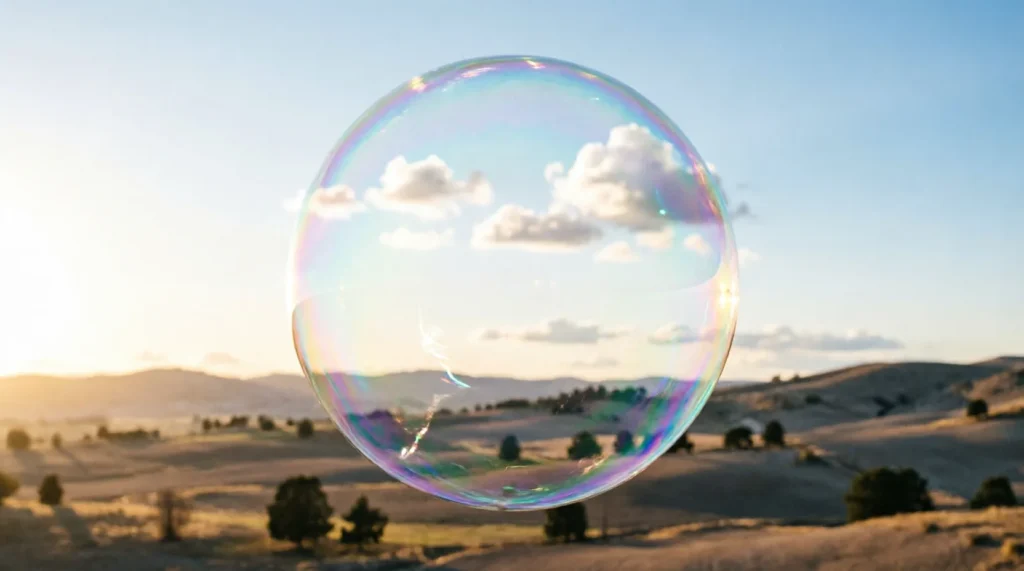
Similes for hot air balloons help you capture the quiet majesty, the precarious grace, and the dreamlike drift of these airborne vessels. Whether you are describing a sunrise flight over vineyards or a solitary balloon lost in twilight, the right comparison anchors the reader’s imagination. The examples below are organized by mood and context so you can find the perfect fit for your scene immediately.
Floating Like a Dream: Gentle and Ethereal Comparisons
When a hot air balloon hangs in still air, it often feels less like a machine and more like a thought made visible. These similes emphasize weightlessness, silence, and slow motion. They work best in lyrical prose, poetry, or moments of introspection in fiction.
“like a soap bubble caught in an updraft” — “The balloon rose like a soap bubble caught in an updraft, fragile and iridescent against the morning sky.” (delicate, transient)
“as silent as a held breath” — “It drifted overhead as silent as a held breath, disturbing nothing in the valley below.” (tense, watchful)
Craft note: This simile works because it transfers the physical sensation of suspension from the body to the object, creating immediate empathy.
“like a dandelion seed on a lazy wind” — “From the hilltop, the balloon looked like a dandelion seed on a lazy wind, destined for nowhere in particular.” (carefree, aimless)
“as weightless as a forgotten wish” — “The basket swayed as weightless as a forgotten wish, untethered from urgency.” (melancholic, soft)
“like a cloud that learned to hold its shape” — “Against the blue, it floated like a cloud that learned to hold its shape, defying the usual rules of vapor.” (whimsical, surreal)
“as slow as honey pouring from a jar” — “Its ascent was as slow as honey pouring from a jar, thick with time and golden light.” (luxurious, viscous)
“like a ghost refusing to fade” — “In the mist, the balloon appeared like a ghost refusing to fade, pale and persistent.” (eerie, lingering)
“as gentle as a lullaby hummed under water” — “The movement was as gentle as a lullaby hummed under water, muffled and safe.” (soothing, distant)
Avoid the cliché “like a bird” here. Birds flap; balloons do not. The power of the balloon simile lies in its lack of effort. If you compare it to something that struggles or exerts energy, you lose the essential magic of passive flight.
Bold and Bright: Visual Impact and Color
Hot air balloons are often vivid splashes of color against neutral skies. These similes focus on visibility, contrast, and the sheer audacity of their presence. Use these when you want the balloon to dominate the scene or symbolize hope, celebration, or intrusion.
“like a jewel dropped into blue velvet” — “The red balloon hung there like a jewel dropped into blue velvet, impossible to ignore.” (precious, striking)
“as bright as a shout in a library” — “Its colors were as bright as a shout in a library, demanding attention in the quiet dawn.” (disruptive, vibrant)
Craft note: This compares visual intensity to auditory disruption. It’s effective because it engages two senses at once, making the image memorable.
“like a stained-glass window set adrift” — “Sunlight passed through the canopy like a stained-glass window set adrift, painting the fields in fractured color.” (artistic, fragmented)
“as conspicuous as a neon sign in a blackout” — “In the gray storm clouds, the yellow balloon stood out as conspicuous as a neon sign in a blackout.” (urgent, isolated)
“like a firework frozen mid-explosion” — “The patterned sphere looked like a firework frozen mid-explosion, all potential energy and no noise.” (dynamic, suspended)
“as bold as a exclamation point in the sky” — “It punctuated the horizon as bold as a exclamation point in the sky, ending the sentence of the landscape.” (grammatical, decisive)
“like a giant beach ball escaped from a picnic” — “Tumbling slightly in the wind, it resembled a giant beach ball escaped from a picnic, playful and out of place.” (casual, humorous)
“as vivid as a memory you can’t quite place” — “The colors were as vivid as a memory you can’t quite place, familiar yet elusive.” (psychological, nostalgic)
According to Wikipedia, modern hot air balloons are typically made of ripstop nylon or polyester, materials chosen for their strength and lightness. This engineering reality allows for the bold, large-scale designs that make these visual similes possible. Without durable, lightweight fabric, the balloon could not sustain the vibrant shapes we associate with them today.
Tethered and Vulnerable: Fragility and Risk
Not every balloon ride is serene. Wind shear, sudden downdrafts, and the inherent vulnerability of fabric over fire create tension. These similes highlight fragility, dependence on elements, and the thin line between safety and disaster. They suit thriller scenes, historical accounts, or moments of character anxiety.
“like a candle flame in a drafty room” — “The balloon hovered like a candle flame in a drafty room, flickering toward extinction with every gust.” (precarious, unstable)
“as vulnerable as an eggshell in a fist” — “Suspended in the storm, it seemed as vulnerable as an eggshell in a fist, waiting for pressure to win.” (dangerous, fragile)
“like a kite with a broken string” — “Drifting off course, it moved like a kite with a broken string, no longer obeying its master.” (out of control, lost)
“as uncertain as a first step on ice” — “The descent was as uncertain as a first step on ice, tentative and prone to slipping.” (hesitant, risky)
“like a paper lantern in a hurricane” — “Against the gale, the balloon struggled like a paper lantern in a hurricane, beautiful but doomed.” (tragic, overwhelmed)
“as exposed as a nerve ending” — “High above the trees, the basket felt as exposed as a nerve ending, sensitive to every shift in air.” (raw, sensitive)
“like a leaf trying to argue with the wind” — “It twisted like a leaf trying to argue with the wind, futile and desperate.” (powerless, struggling)
“as temporary as footprints in tide” — “Their path across the sky was as temporary as footprints in tide, erased by the next breath of air.” (ephemeral, insignificant)
Be careful not to overuse “fragile” synonyms. The best similes here show why it is fragile. Compare it to things that break easily under specific conditions (ice, eggshells, paper) rather than just saying it is weak.
Majestic and Timeless: Grandeur and Scale
Sometimes a balloon represents freedom, perspective, or the sublime. These similes elevate the subject, connecting it to history, nature, or spiritual concepts. Use these in epic fantasy, travel writing, or reflective essays.
“like a planet discovering its own orbit” — “The massive sphere rotated slowly, like a planet discovering its own orbit, self-contained and grand.” (cosmic, autonomous)
“as regal as a king surveying his domain” — “From the basket, the view was as regal as a king surveying his domain, absolute and commanding.” (authoritative, proud)
“like a cathedral bell floating upward” — “The shape reminded me of a cathedral bell floating upward, sacred and resonant even in silence.” (spiritual, monumental)
Craft note: This works because it combines shape (bell) with function (church/spirituality), adding layers of meaning beyond mere appearance.
“as timeless as the mountains below” — “It drifted as timeless as the mountains below, unrelated to the hurry of the roads.” (eternal, peaceful)
“like a myth stepping out of storybooks” — “Seeing it crest the ridge felt like watching a myth stepping out of storybooks, impossible yet real.” (legendary, wondrous)
“as dignified as an elder statesman” — “The balloon moved as dignified as an elder statesman, unhurried and aware of its importance.” (respectful, serious)
“like a ship sailing an invisible sea” — “It navigated the currents like a ship sailing an invisible sea, guided by forces unseen.” (nautical, exploratory)
“as profound as a question without an answer” — “Its silence was as profound as a question without an answer, deep and unsettling.” (philosophical, mysterious)
How to Write Your Own Hot Air Balloon Simile
Creating a fresh simile requires moving beyond the obvious. Follow these three steps to build comparisons that feel earned rather than borrowed.
- Identify the dominant trait. Is the balloon fast or slow? Loud or silent? Colorful or plain? Dangerous or safe? Pick one trait. Do not try to capture everything. For example, if the balloon is drifting lazily, focus on slowness.
- Find an unexpected source. Look outside the sky. Think of kitchens, offices, forests, or bodies. What else moves slowly? Honey. A sloth. A sinking feeling. The more distant the source, the more surprising the simile.
- Test for rhythm. Read the sentence aloud. A good simile should not stumble. “Like a rock” is short and punchy. “Like a gigantic, multicolored, spherical object made of fabric” is a mess. Trim the fat.
Worked Example:
Trait: The balloon is rising very slowly.
Source: A plant growing.
Draft: “It rose like a plant growing.” (Too boring.)
Refinement: “It ascended like a vine seeking sunlight, inch by deliberate inch.” (Better. Adds intent and imagery.)
Frequently Asked Questions
What is the difference between a simile and a metaphor for a hot air balloon?
A simile uses “like” or “as” to compare the balloon to something else (e.g., “like a bubble”). A metaphor states the balloon is that thing (e.g., “the balloon was a bubble”). Similes are safer for beginners; metaphors are bolder but risk confusion if the comparison is too abstract.
Can I use similes for hot air balloons in technical writing?
Generally, no. Technical manuals require precision. However, in popular science articles or travel brochures, similes help non-experts visualize scale and behavior. Use them sparingly and only when they clarify rather than decorate.
Why do some balloon similes feel cliché?
Clichés like “like a bird” or “like a cloud” are overused because they are easy. They lack specificity. A bird flaps; a balloon does not. A cloud changes shape; a balloon holds its form. To avoid clichés, choose comparisons that respect the unique physics of lighter-than-air flight.
Where can I learn more about the structure of similes?
A simile is a figure of speech involving the comparison of one thing with another thing of a different kind, used to make a description more emphatic or vivid. Understanding this definition helps you ensure your comparisons are between unlike things, which creates the necessary spark of insight.

Melissa Harris combines her background in creative writing with a keen analytical mind to bring a unique perspective on similes and figurative language. She holds a Bachelor of Arts in Creative Writing from the University of Iowa and a Ph.D. in Comparative Literature from Stanford University. Her love for the lyrical and the whimsical aspects of language drew her to specialize in figurative speeches, such as similes. With over a decade of experience as a writer and editor, Melissa is adept at breaking down complex figurative constructs into digestible insights for her audience. She is especially interested in the cognitive impact of similes in poetry and prose and enjoys experimenting with innovative approaches to simile creation in her writing. At SimileStation, Melissa contributes in-depth analysis pieces and creative exercises designed to spark imagination and refine readers’ use of similes. Her work inspires others to view language as an ever-evolving canvas, where words create a vivid tapestry of expression.