

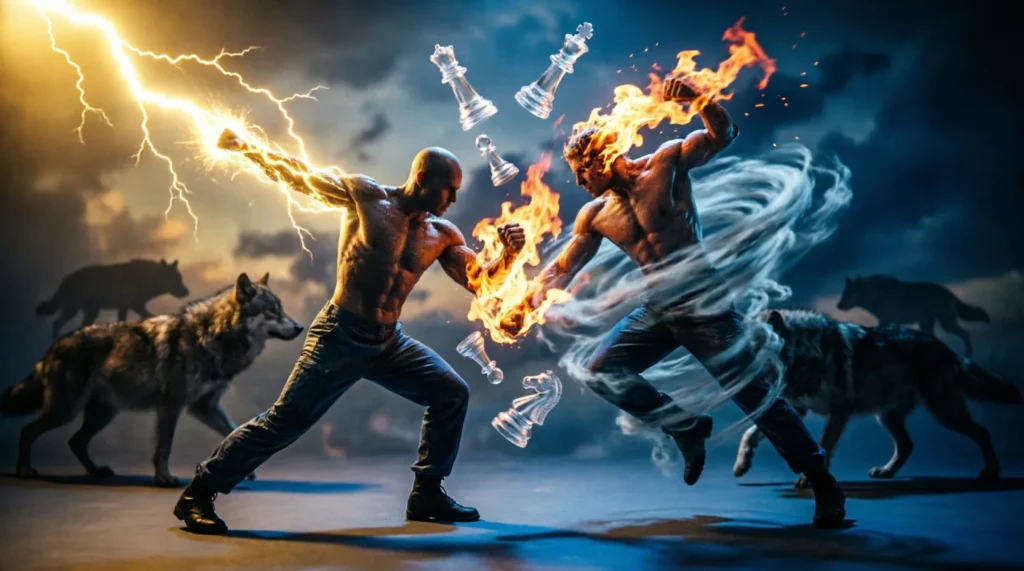
Similes and metaphors transform abstract conflict into visceral, tangible experiences. When you describe a fight using figurative language, you move beyond the mechanics of punches and kicks to capture the emotional weight, the sudden violence, or the grinding endurance of a struggle. The examples below are categorized by the type of conflict—physical, verbal, internal, and strategic—so you can find the precise comparison that matches the tone of your scene. Use these to sharpen your prose and make every confrontation feel immediate and real.
What Is a Simile?
A simile is a figure of speech that directly compares two different things using the words “like” or “as.” Unlike a metaphor, which states that one thing is another, a simile maintains the distinction between the two elements while highlighting a shared quality. For instance, saying “the argument was like a storm” suggests similarity in intensity and chaos without claiming the argument literally became weather. This distinction allows writers to create vivid imagery while keeping the logic of the comparison clear for the reader. According to Metaphor, this direct comparison is a foundational tool in rhetoric and literature, enabling speakers and writers to convey complex ideas through familiar sensory experiences.
Physical Violence and Raw Power
When describing hand-to-hand combat or brutal physical altercations, you need similes that convey impact, speed, and danger. These comparisons often draw from nature, machinery, or predators to emphasize the raw force involved.
- “like a sledgehammer hitting wet clay” — “His fist connected like a sledgehammer hitting wet clay.” (visceral, heavy, destructive). This works because it appeals to both sound and touch; you can feel the dull thud and see the deformation.
- “as relentless as a tidal wave” — “The boxer came forward as relentless as a tidal wave.” (overwhelming, inevitable, exhausting). It captures the sheer volume of attacks that cannot be blocked, only endured.
- “like a coiled spring snapping” — “She struck out like a coiled spring snapping.” (sudden, explosive, tense). This highlights the potential energy released in a single moment, perfect for ambushes or counter-attacks.
- “as sharp as shattered glass” — “His elbows were as sharp as shattered glass.” (dangerous, cutting, painful). It emphasizes the jagged, unpredictable nature of close-quarters fighting.
- “like a bull in a china shop” — “He fought like a bull in a china shop.” (clumsy, destructive, chaotic). Craft note: This is a cliché. Avoid it unless you are intentionally portraying a character who is unskilled and causing collateral damage. It lacks the precision of modern combat descriptions.
- “as heavy as a falling anvil” — “The kick landed as heavy as a falling anvil.” (crushing, final, industrial). It suggests a weight that pins the opponent down, removing any chance of recovery.
- “like a whip cracking in the dark” — “The punch snapped like a whip cracking in the dark.” (fast, stinging, surprising). The auditory element here makes the speed palpable.
- “as wild as a cornered animal” — “He fought as wild as a cornered animal.” (desperate, unpredictable, fierce). This shifts the focus from skill to survival instinct, useful for underdog scenarios.
Verbal Sparring and Heated Arguments
Not all fights involve fists. Verbal conflicts require similes that capture the sting of words, the heat of anger, and the psychological maneuvering of debate. These comparisons often use fire, weapons, or natural disasters to illustrate emotional damage.
- “like a knife twisting in a wound” — “Her remark cut like a knife twisting in a wound.” (cruel, personal, lingering). It implies that the speaker knows exactly where the listener is vulnerable.
- “as cold as ice water” — “His rejection was as cold as ice water.” (shocking, numbing, dismissive). This works well for arguments that end abruptly with indifference rather than shouting.
- “like a swarm of bees” — “The questions came at him like a swarm of bees.” (overwhelming, irritating, persistent). It captures the feeling of being attacked from multiple angles simultaneously.
- “as sharp as a razor’s edge” — “His wit was as sharp as a razor’s edge.” (precise, dangerous, intelligent). This suggests a controlled, surgical approach to argumentation rather than brute force.
- “like a forest fire in dry grass” — “The rumor spread like a forest fire in dry grass.” (fast, uncontrollable, destructive). Ideal for describing how a small comment can escalate into a major conflict.
- “as hollow as a drum” — “His apologies sounded as hollow as a drum.” (insincere, empty, performative). It focuses on the lack of substance behind the words.
- “like a pendulum swinging” — “The argument went back and forth like a pendulum swinging.” (repetitive, tiring, unresolved). This captures the exhaustion of circular debates where no progress is made.
- “as brittle as dry twigs” — “Their trust was as brittle as dry twigs.” (fragile, easily broken, tense). This sets the stage for a fight that happens over a minor trigger because the foundation is already weak.
Internal Struggle and Emotional Conflict
Sometimes the most intense fights happen within a character’s mind. These similes describe anxiety, indecision, guilt, or moral dilemmas. They tend to be more abstract, drawing on imagery of weight, entanglement, or darkness.
- “like a knot tightening in my chest” — “The anxiety felt like a knot tightening in my chest.” (constricting, painful, growing). It physicalizes an emotion, making it easier for readers to empathize.
- “as heavy as a stone cloak” — “Guilt hung on him as heavy as a stone cloak.” (burdensome, dragging, inescapable). This suggests that the internal conflict is slowing the character down in their external life.
- “like two wolves fighting inside” — “His conscience was like two wolves fighting inside.” (primal, binary, exhausting). Craft note: While popular, this specific image is often overused. Consider varying it to “two tides pulling in opposite directions” for a more fluid, less predatory feel.
- “as tangled as old vines” — “My thoughts were as tangled as old vines.” (confusing, stuck, hard to unravel). This works well for scenes where a character is trying to make a difficult decision.
- “like a record skipping” — “My fear played like a record skipping.” (repetitive, stuck, annoying). It captures the intrusive nature of anxious thoughts that won’t go away.
- “as dark as a closed room” — “Despair felt as dark as a closed room.” (isolating, suffocating, hopeless). It emphasizes the lack of perspective or exit strategies.
- “like a storm behind my eyes” — “The anger brewed like a storm behind my eyes.” (pressurized, imminent, volatile). This suggests that the internal conflict is about to explode outward.
- “as thin as rice paper” — “My patience was as thin as rice paper.” (fragile, transparent, ready to tear). It implies that even a small touch will cause a breakdown.
Strategic Conflict and Endurance
Long-term conflicts, such as wars, legal battles, or competitive rivalries, require similes that emphasize duration, strategy, and attrition. These comparisons often draw from games, nature, or machinery to show the slow grind of opposition.
- “like a chess match in slow motion” — “The negotiation was like a chess match in slow motion.” (calculated, strategic, tense). It highlights the intellectual aspect of the fight rather than physical prowess.
- “as enduring as granite” — “Her resolve was as enduring as granite.” (unyielding, hard, timeless). This is perfect for characters who refuse to back down despite overwhelming odds.
- “like a tide eroding the shore” — “The criticism wore him down like a tide eroding the shore.” (gradual, inevitable, natural). It shows how small, repeated actions can cause significant damage over time.
- “as intricate as a spider’s web” — “The conspiracy was as intricate as a spider’s web.” (complex, trapping, delicate). This suggests that the conflict involves many interconnected parts that are easy to miss.
- “like a marathon in the desert” — “The lawsuit felt like a marathon in the desert.” (exhausting, long, dehydrating). It emphasizes the resource drain of prolonged conflict.
- “as silent as a stalking cat” — “The enemy moved as silent as a stalking cat.” (stealthy, patient, dangerous). This applies to conflicts where the threat is not yet visible but is definitely present.
- “like a rusted gear” — “The peace talks ground on like a rusted gear.” (slow, noisy, inefficient). It captures the friction and difficulty of making progress in a stalled conflict.
- “as balanced as a house of cards” — “The truce was as balanced as a house of cards.” (precarious, fragile, temporary). This warns the reader that the current peace is unstable and likely to collapse.
How to Write Your Own Fighting Simile
Creating original similes for conflict requires observing the specific qualities of the fight you are describing. Follow these three steps to craft comparisons that feel fresh and accurate.
- Identify the core sensation. Ask yourself: What does this fight feel like? Is it fast, slow, hot, cold, heavy, or sharp? Don’t just think about what it looks like; think about the physical or emotional impact on the character. For example, if a character is overwhelmed, the core sensation might be “drowning” or “being buried.”
- Find a concrete object with that quality. Look for an object, animal, or natural phenomenon that shares that sensation. If the sensation is “drowning,” you might choose “a riptide” or “a heavy blanket.” If the sensation is “sharp,” you might choose “broken glass” or “a hawk’s talon.”
- Connect them with “like” or “as.” Combine the two elements simply. Test the rhythm. Read it aloud. If it feels clunky, simplify the object. The best similes are often the simplest because they allow the reader to make the connection instantly.
Worked Example:
- Core Sensation: A verbal argument that is confusing and goes in circles.
- Concrete Object: A maze or a tangled ball of yarn.
- Simile: “The argument twisted like a tangled ball of yarn.”
Frequently Asked Questions
What is the difference between a simile and a metaphor in fighting scenes? A simile uses “like” or “as” to compare the fight to something else (e.g., “he fought like a tiger”), while a metaphor states the fight is that thing (e.g., “he was a tiger in the ring”). Similes are often clearer for quick action, while metaphors can create a deeper, more immersive identity for the character.
How do I avoid clichés when writing about conflict? Avoid overused comparisons like “fighting like cats and dogs” or “hot as fire.” Instead, look for specific, unusual details in your scene. If a character is fighting in the rain, compare their movements to slippery eels or splashing puddles. Specificity kills clichés.
Can similes be used for non-violent conflicts? Absolutely. Similes are powerful for describing emotional, legal, or political struggles. Comparing a debate to “a chess match” or grief to “a heavy cloak” helps readers understand the intensity of non-physical fights. According to Fighting, conflict encompasses a broad range of human interactions beyond physical violence, including verbal disputes and ideological clashes.
How many similes should I use in a single scene? Use sparingly. One strong simile per paragraph is usually enough. Overloading a scene with figurative language can slow down the pacing and distract from the action. Save your best comparisons for the most impactful moments.

Kenneth White is a seasoned linguist with over 15 years of experience in studying and teaching figurative language. He earned his Master’s degree in English Literature from Yale University, where he developed a deep interest in the art of similes and metaphors. His fascination with how similes enhance storytelling and evoke vivid imagery has been a guiding force throughout his career. Kenneth has conducted numerous workshops and seminars, educating students and fellow writers on effectively incorporating similes into their work. He has authored several papers detailing the evolution of simile usage across different literary periods. At SimileStation, Kenneth focuses on exploring the historical significance of similes and how they reflect cultural contexts. His articles dissect famous literary works, highlighting the creative use of figurative language to inspire emerging writers. Kenneth’s passion for language is as unwavering as a lighthouse in a storm, guiding readers through the complexities of simile construction and application.