

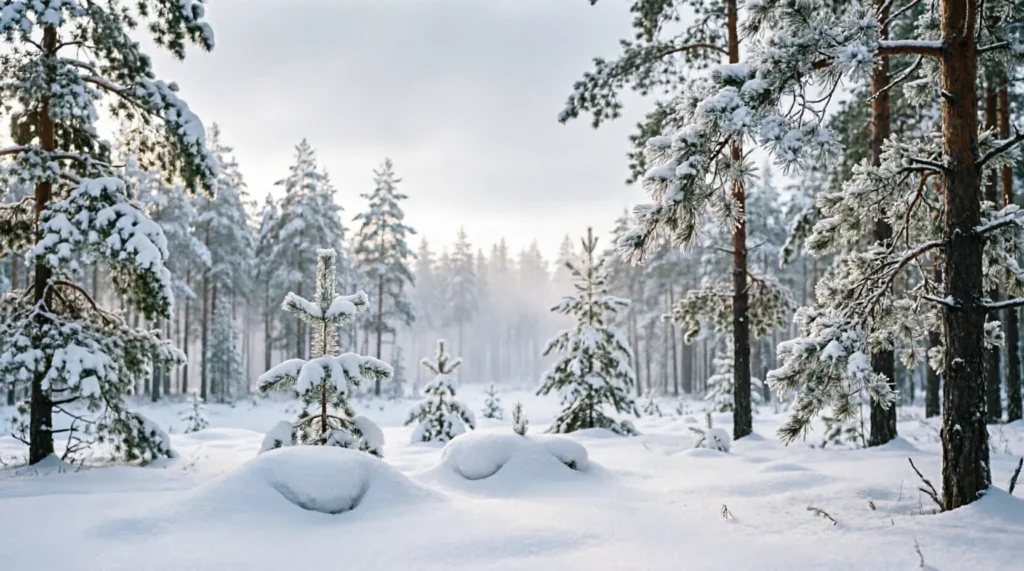
Similes to describe a winter scene do more than just state that it is cold; they anchor the reader in the sensory reality of frost, silence, and biting wind. According to the foundational understanding of how we describe things, the act involves giving a detailed account that engages the senses, moving far beyond a simple inventory of temperatures. Use the curated examples below to instantly drop your readers into the heart of a winter landscape, whether you are drafting a college admissions essay, a fantasy novel, or a reflective personal memoir.
The Serene and Silent Winter
Not all winter scenes are hostile. Many writers seek to capture the profound stillness and purity of a fresh snowfall. These similes focus on peace, potential, and the hushed atmosphere of a dormant landscape.
- “as quiet as a held breath” — “The forest was as quiet as a held breath, waiting for the first snowflake to fall.” (hushed, anticipatory). Craft note: This works because it ties the external silence to a deeply human, physical sensation of anticipation, making the reader hold their own breath.
- “like a blank page” — “The fresh snow covered the yard like a blank page, daring me to make the first mark.” (pure, full of potential).
- “as still as a sleeping child” — “The valley lay as still as a sleeping child, untouched by the morning wind.” (peaceful, vulnerable).
- “like powdered sugar dusted over dark earth” — “The hills looked like powdered sugar dusted over dark earth, a stark contrast against the black pine trees.” (visual, slightly whimsical).
- “as smooth as polished marble” — “The frozen pond was as smooth as polished marble, reflecting the pale gray sky without a single ripple.” (elegant, cold).
- “like a whispered secret” — “The falling snow settled on the rooftops like a whispered secret, unnoticed by the bustling town below.” (intimate, gentle).
- “as pristine as a newly made bed” — “The untouched snowdrift was as pristine as a newly made bed, inviting but strictly off-limits.” (tidy, restrained).
- “like a soft white blanket” — “The meadow was covered like a soft white blanket, muffling the usual sounds of the countryside.” (comforting, insulating). Note: While “blanket” is a common metaphor, framing it as a simile keeps it grounded as a relatable, cozy comparison for younger audiences or cozy mysteries.
The Bitter and Harsh Winter
When the weather turns hostile, your language must match the aggression of the elements. These similes convey pain, relentless cold, and the sheer physical toll of a severe winter storm.
- “as sharp as shattered glass” — “The wind cut across the tundra as sharp as shattered glass, stinging every exposed inch of skin.” (painful, aggressive). Craft note: The harsh ‘sh’ and ‘s’ sounds in ‘sharp’ and ‘shattered’ mimic the actual sound of biting wind, creating powerful sonic resonance.
- “like a rusted blade” — “The January air felt like a rusted blade in my lungs, harsh and unforgiving with every inhalation.” (gritty, painful). Craft note: The juxtaposition of a biological organ with a decaying industrial object creates a visceral, uncomfortable texture that pure temperature words cannot achieve.
- “as unforgiving as an iron gate” — “The frost gripped the garden as unforgiving as an iron gate, locking away any hope of spring.” (relentless, imposing).
- “like a swarm of angry bees” — “The blizzard hit the cabin like a swarm of angry bees, relentless, chaotic, and deafening against the wooden walls.” (overwhelming, chaotic).
- “as bleak as a forgotten graveyard” — “The landscape stretched out as bleak as a forgotten graveyard, stripped of all color, warmth, and life.” (desolate, somber).
- “like a heavy, wet wool blanket” — “The freezing rain coated the trees like a heavy, wet wool blanket, bowing the branches dangerously close to the ground.” (oppressive, suffocating).
- “as brittle as dried bones” — “The frozen twigs snapped as brittle as dried bones under the weight of the accumulating ice.” (fragile, macabre).
- “like a pack of starving wolves” — “The nor’easter howled around the eaves like a pack of starving wolves, searching for any weakness in the house’s defenses.” (predatory, menacing). Avoid the tired cliché “cold as ice” here; it is overused and tells the reader nothing new. Reach for “rusted blade” or “starving wolves” instead to create genuine tension.
The Magical and Ethereal Winter
Winter possesses a unique capacity for enchantment. These similes are perfect for fantasy settings, lyrical prose, or moments where the natural world feels otherworldly and transformed by ice and light.
- “like a kingdom of spun glass” — “After the ice storm, the woods resembled a kingdom of spun glass, glittering dangerously in the weak afternoon sun.” (fragile, dazzling). Craft note: “Spun glass” evokes both extreme beauty and the immediate threat of breaking, adding subtle narrative tension to an otherwise static descriptive passage.
- “as bright as a thousand diamonds” — “The fresh snow crust sparkled as bright as a thousand diamonds under the midday sun, blinding and brilliant.” (dazzling, intense).
- “like a scene from a forgotten fairy tale” — “The snow-draped cottage stood like a scene from a forgotten fairy tale, complete with natural icicle chandeliers hanging from the eaves.” (nostalgic, enchanting).
- “as delicate as a lace doily” — “The frost patterns on the windowpane were as delicate as a lace doily, intricate, beautiful, and entirely fleeting.” (intricate, fragile).
- “like silver thread woven through the dark” — “The moonlight on the snow looked like silver thread woven through the dark, guiding the traveler’s way forward.” (poetic, guiding).
- “as luminous as a pearl” — “The full moon rose over the snowdrifts, as luminous as a pearl against the deep indigo sky.” (glowing, serene).
- “like a cathedral of ice” — “The frozen waterfall stood like a cathedral of ice, its towering columns demanding silent reverence from anyone who passed.” (majestic, awe-inspiring).
- “as clear as crystal” — “The air after the snowstorm was as clear as crystal, allowing us to see the mountain peaks from miles away.” (pure, sharply defined). While “as white as snow” is technically accurate, it is a redundant cliché that adds zero value to your prose. Skip it entirely in favor of “like a kingdom of spun glass,” which provides actual visual texture and narrative weight.
The Melancholic and Fading Winter
Late winter carries a specific mood of exhaustion and decay. These similes capture the slush, the graying skies, and the weary transition toward spring, ideal for literary fiction or reflective essays.
- “like a dying ember” — “The last of the winter sun faded like a dying ember, leaving the world in a premature, chilly twilight.” (fading, somber).
- “as gray as old dishwater” — “The slush in the city gutters was as gray as old dishwater, a sad, grimy reminder of the season’s end.” (grimy, disappointing).
- “like a ghost of its former self” — “The once-majestic snowman stood like a ghost of its former self, melting into a shapeless, carrot-nosed puddle.” (decaying, nostalgic).
- “as weary as an old traveler” — “The late-February wind blew as weary as an old traveler, lacking the fierce, youthful bite it had possessed in December.” (exhausted, waning).
- “like a watercolor left out in the rain” — “The vibrant winter berries bled into the melting snow like a watercolor left out in the rain, blurring the landscape.” (dissolving, messy). Craft note: This comparison works beautifully because it captures both the visual bleeding of color and the emotional sense of something beautiful being ruined by the elements.
- “as hollow as an abandoned house” — “The frozen lake sounded as hollow as an abandoned house when we walked across its thinning, groaning ice.” (empty, ominous).
- “like a tired actor forgetting their lines” — “The spring thaw arrived like a tired actor forgetting their lines, stuttering between freezing nights and warm afternoons.” (hesitant, inconsistent).
- “as dull as tarnished silver” — “The sky remained as dull as tarnished silver for weeks, refusing to offer a single break of blue.” (monotonous, depressing).
How to write your own winter scene simile
Crafting a memorable comparison requires more than just grabbing the first word that comes to mind. Before you begin, it helps to remember the core mechanics of the device. A simile is a figure of speech that directly compares two different things, typically using “like” or “as”, to highlight a shared quality. The key is to find a surprising but accurate connection that serves your specific narrative mood.
Step 1: Isolate the specific sensory detail. Do not just say “the winter scene.” Decide what exactly you are describing. Is it the sound of the wind? The texture of the snow? The color of the sky? Narrow your focus to a single, tangible element.
Step 2: Identify the emotional resonance. Ask yourself what feeling this detail should evoke in the reader. Should the frozen lake feel dangerous, peaceful, or magical? The emotion will dictate your comparison. A peaceful lake is “like polished marble,” while a dangerous one is “like a trap waiting to snap.”
Step 3: Brainstorm unexpected comparisons. Push past the first three ideas that come to mind, as they are usually clichés. If you are describing biting cold, skip “like an ice cube.” Instead, think about other things that are sharp, invasive, or metallic.
Worked Example: Target: Describe the sound of walking on deep, cold snow. Emotion: Isolation and crispness. Draft 1 (Cliché): The snow crunched like cereal. (Too mundane, breaks the mood). Draft 2 (Better): The snow crunched like dry leaves. (Inaccurate for winter). Draft 3 (Strong): “The snow crunched under my boots like crushed sugar glass, a sharp, lonely sound in the empty woods.” This works because “crushed sugar glass” captures both the auditory crunch and the fragile, cold nature of the snowpack, while reinforcing the isolated mood.
Frequently Asked Questions
What is the difference between a simile and a metaphor when describing winter? A simile explicitly compares two things using “like” or “as” (e.g., “the snow was like a blanket”), while a metaphor states that one thing is another (e.g., “the snow was a blanket”). Similes are often safer for maintaining a clear, grounded description, whereas metaphors can feel more assertive and poetic. Choose based on whether you want to suggest a resemblance or declare an identity.
How do I avoid clichés when writing about winter? The easiest way to avoid clichés is to ban phrases like “winter wonderland,” “cold as ice,” and “white blanket” from your first draft. Instead, focus on highly specific, unusual details. Compare the winter scene to things outside the typical winter lexicon, such as machinery, forgotten objects, or specific human emotions, to create a fresh perspective.
Can I use similes to describe winter in a college admissions essay? Absolutely, but use them sparingly and with purpose. A single, well-crafted simile can demonstrate strong observational skills and a mature command of language. For example, describing a childhood memory of shoveling snow where the “wind felt like a rusted blade” shows resilience and vivid descriptive ability without sounding overly flowery or forced.
Why are sensory details so crucial when describing a winter scene? Readers cannot feel the cold themselves; they rely entirely on your precise comparisons to shiver, squint, or marvel alongside your narrator. By anchoring abstract temperatures to concrete, relatable objects, you transform a flat setting into a living, breathing environment that lingers in the reader’s mind long after they finish the paragraph.

Richard Jackson is an expert in semantics and figurative language, with particular expertise in simile theory and practice. Holding a Ph.D. in Linguistics from Harvard University, where his thesis focused on simile and metaphor in modern literature, Richard has dedicated over 20 years to the study of figurative language. His journey into this field began with a fascination for how similes can unlock deeper meanings and create resonant storytelling moments. Richard’s work examines the cognitive processes behind simile construction and comprehension, offering insights into how these figures of speech influence reader perception. He has published numerous articles and book chapters, cementing his status as a thought leader in the linguistic community. At SimileStation, Richard writes about the psychological underpinnings of similes, comparative linguistic analyses, and offers tips for writers aiming to enhance their craft. His dedication to language is as deep as the ocean, continually exploring new depths in the world of figurative expression.