

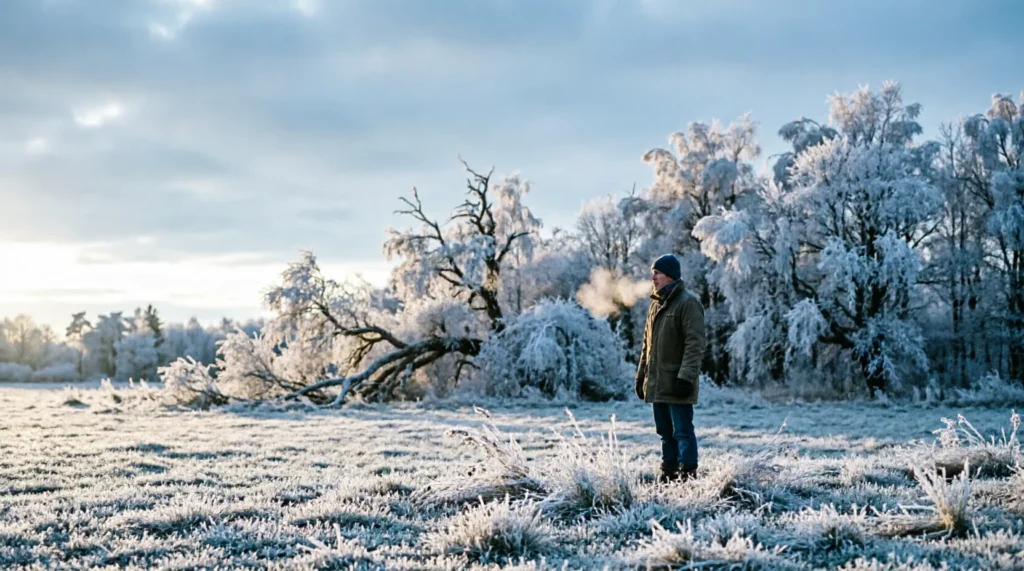
When winter’s grip tightens and the mercury plummets, ordinary language falls short. Similes give you the power to make readers feel that bone-deep chill, not just understand it intellectually. The examples below are organized by the type of cold experience, each embedded in a real sentence so you can lift them directly into your writing.
Physical Sensations: Cold That Touches the Skin
These similes capture what cold feels like against your body—the immediate, sensory experience that hits you the moment you step outside.
-
“like a thousand tiny needles pricking my cheeks” — “I opened the door and the wind hit me like a thousand tiny needles pricking my cheeks.” (sharp, immediate pain)
-
“as cold as a steel doorknob in January” — “Her hand was as cold as a steel doorknob in January when she reached for mine.” (familiar, shocking cold)
-
“like walking through a freezer with the door wide open” — “Stepping outside felt like walking through a freezer with the door wide open.” (overwhelming, artificial cold)
-
“as biting as a snap from a rubber band” — “The gust caught me off guard, as biting as a snap from a rubber band against bare skin.” (sudden, stinging)
-
“like ice water running through my veins” — “The cold wind made me feel like ice water was running through my veins.” (internal, systemic)
-
“as sharp as broken glass underfoot” — “The air was as sharp as broken glass underfoot, cutting with every breath.” (dangerous, unforgiving)
-
“like being wrapped in wet newspaper” — “My coat did nothing; I felt like being wrapped in wet newspaper on a cold day.” (ineffective protection, clammy)
Craft note: The steel doorknob simile works because it’s universally experienced—that specific shock of metal cold that’s different from any other surface. It’s concrete and instantly recognizable, which makes it stronger than vague comparisons.
Aggressive Cold: When Winter Attacks
Some cold days don’t just exist—they assault you. These similes personify cold as an active, hostile force.
-
“like a wolf pack circling for the kill” — “The wind came at us like a wolf pack circling for the kill, relentless and hungry.” (predatory, coordinated)
-
“as vicious as a cornered animal” — “The blizzard was as vicious as a cornered animal, lashing out without mercy.” (desperate, dangerous)
-
“like a bully shoving you against a wall” — “That cold front hit like a bully shoving you against a wall—no warning, just impact.” (aggressive, personal)
-
“as relentless as a swarm of hornets” — “The freezing rain fell as relentless as a swarm of hornets, stinging everywhere at once.” (overwhelming, painful)
-
“like an enemy army breaching the gates” — “The cold poured through my scarf like an enemy army breaching the gates.” (invading, defeating defenses)
-
“as cruel as a child pulling wings off flies” — “The wind was as cruel as a child pulling wings off flies, tormenting us for no reason.” (sadistic, senseless)
-
“like a bouncer throwing you out into the street” — “The temperature drop hit like a bouncer throwing you out into the street—sudden and unwelcome.” (abrupt, forceful)
Avoid this cliché: “Cold as ice” is so overused it’s become meaningless. Your reader’s eyes will glaze over. Instead, specify what kind of ice and where—ice on a windshield, ice in your drink, ice on a pond. Specificity rescues tired comparisons.
Stillness and Silence: Cold That Freezes the World
Not all cold is violent. Some winter days create an eerie quiet, a suspended animation where sound itself seems to freeze.
-
“as silent as a held breath” — “The morning was as silent as a held breath, waiting for something to break the stillness.” (tense, anticipatory)
-
“like a museum after closing time” — “The frozen lake looked like a museum after closing time—preserved, untouched, empty.” (preserved, abandoned)
-
“as still as a photograph” — “The world was as still as a photograph, not even the trees daring to move.” (frozen in time)
-
“like a library where everyone’s afraid to whisper” — “The cold created a hush like a library where everyone’s afraid to whisper.” (reverent, fragile)
-
“as quiet as snow falling on snow” — “The night was as quiet as snow falling on snow, sound absorbed into white.” (muffled, gentle)
-
“like a paused movie frame” — “Everything looked like a paused movie frame, suspended mid-motion.” (artificial stillness)
-
“as hushed as a church at midnight” — “The frozen forest was as hushed as a church at midnight, sacred and empty.” (spiritual, solemn)
Craft note: “As silent as a held breath” works because it creates tension—the reader instinctively holds their own breath while reading it. That physical response makes the simile memorable. It’s not just describing silence; it’s creating it in the reader.
Visual Transformation: Cold That Changes Everything
These similes focus on how cold looks—the way it transforms familiar landscapes into alien territories.
-
“like the world dipped in silver paint” — “The frost covered everything like the world had been dipped in silver paint overnight.” (decorative, artificial beauty)
-
“as white as a blank page waiting for words” — “The field stretched out as white as a blank page waiting for words.” (pure, full of potential)
-
“like a cake covered in powdered sugar” — “The trees looked like a cake covered in powdered sugar, almost too perfect to be real.” (sweet, decorative)
-
“as gray as old television static” — “The sky was as gray as old television static, blank and lifeless.” (dead, monotonous)
-
“like a crystal chandelier shattered on the ground” — “The ice on the branches looked like a crystal chandelier shattered on the ground.” (beautiful destruction)
-
“as blue as a gas flame” — “The shadows stretched across the snow as blue as a gas flame, cold fire.” (paradoxical, eerie)
-
“like someone turned down the saturation on the world” — “The cold day looked like someone turned down the saturation on the world, leaving only grays and whites.” (drained, faded)
Strongest in this category: The “crystal chandelier shattered on the ground” simile because it combines beauty with violence—ice is gorgeous but dangerous. That tension makes it stick in the reader’s mind.
Deep Cold: When It Gets Inside You
Some cold doesn’t just touch your skin; it penetrates, settles in your bones, and refuses to leave. These similes describe that invasive chill.
-
“like swallowing a handful of snow” — “The wind made me feel like swallowing a handful of snow, cold spreading from the inside out.” (internal, shocking)
-
“as deep as a well in winter” — “The cold went as deep as a well in winter, reaching places warmth couldn’t find.” (profound, unreachable)
-
“like a stone dropped in my stomach” — “That freezing gust hit like a stone dropped in my stomach, sinking and heavy.” (dread, physical weight)
-
“as penetrating as a surgeon’s scalpel” — “The wind was as penetrating as a surgeon’s scalpel, finding every gap in my clothing.” (precise, clinical)
-
“like a ghost walking through your walls” — “The cold came in like a ghost walking through your walls, impossible to keep out.” (supernatural, inevitable)
-
“as thorough as a detective searching for clues” — “The chill was as thorough as a detective searching for clues, leaving no corner of me untouched.” (meticulous, inescapable)
-
“like drinking liquid nitrogen” — “Breathing that air felt like drinking liquid nitrogen, instantly freezing everything it touched.” (extreme, dangerous)
Craft note: “Like a ghost walking through your walls” succeeds because it captures the helplessness of deep cold—you can’t fight what passes through solid matter. It also adds an eerie, supernatural quality that elevates a simple temperature description into something unsettling.
Unusual and Poetic Comparisons
These similes break from expected cold imagery, offering fresh perspectives that surprise readers.
-
“like the silence after a funeral” — “The cold morning felt like the silence after a funeral, heavy with absence.” (mournful, empty)
-
“as old as the first winter” — “That cold felt as old as the first winter, primordial and unchanging.” (ancient, eternal)
-
“like a forgotten promise” — “The chill in the air was like a forgotten promise, cold and broken.” (emotional, disappointing)
-
“as lonely as a lighthouse in a storm” — “Standing outside felt as lonely as a lighthouse in a storm, isolated and battered.” (isolated, heroic)
-
“like a piano left out in the rain” — “The frozen world looked like a piano left out in the rain, beautiful instrument ruined by neglect.” (tragic, wasteful)
-
“as distant as a star’s cold light” — “The cold felt as distant as a star’s cold light, beautiful but utterly indifferent.” (cosmic, uncaring)
-
“like a clock that’s stopped at midnight” — “The frozen afternoon was like a clock that’s stopped at midnight, time itself suspended.” (suspended, eerie)
My students’ favorite: The “piano left out in the rain” comparison consistently resonates because it suggests something valuable being destroyed by the elements. It’s not just cold—it’s wasteful cold, which adds emotional weight.
How to Write Your Own Cold Day Simile
Creating original similes for cold doesn’t require poetic genius—just a systematic approach. Here’s my three-step method that I teach in every workshop:
Step 1: Identify the specific quality of cold you’re describing. Is it sharp? Deep? Silent? Aggressive? Don’t just say “cold”—name the exact sensation.
Step 2: Brainstorm objects, experiences, or phenomena that share that quality. If your cold is “sharp,” think: needles, knives, broken glass, criticism, lightning.
Step 3: Test it aloud. A good simile has rhythm. Read it in your sentence. Does it flow, or does it stumble?
Worked example: Let’s say you want to describe cold that lingers.
- Quality: persistent, won’t leave
- Brainstorm: a bad smell, an unwanted guest, a song stuck in your head, a stain
- Draft: “The cold clung to me like a song stuck in my head, impossible to shake.”
- Refine: “The cold clung like a song stuck in my head, playing on repeat no matter how I tried to warm up.”
See how the second version adds context and extends the comparison? That’s the difference between adequate and memorable.
Frequently Asked Questions
What makes a cold weather simile effective?
The best similes for cold are specific and sensory. Instead of “cold as ice,” try “cold as the ice that forms on your windshield at 5 AM.” The specific detail creates a stronger image. Effective similes also match the type of cold—biting wind needs different language than still, deep cold.
Can I mix metaphors and similes when describing cold?
Yes, but carefully. You might write “The cold was a wolf” (metaphor) and then “its breath cut like a knife” (simile). The key is maintaining consistency within each image. Don’t switch from animal imagery to kitchen utensils in the same paragraph unless you’re doing it deliberately for effect.
How do I avoid clichés when writing about cold?
Clichés are comparisons everyone’s heard before: “cold as ice,” “freezing my butt off,” “chill to the bone.” To avoid them, push past your first idea. Your brain reaches for clichés because they’re familiar. Force yourself to generate three alternatives before settling on one. Ask: what does this cold remind me of that’s unexpected? The answer is usually more original than “ice.”
Should I use multiple similes in one paragraph?
Two, maximum. More than that and you’re showing off instead of communicating. Pick the strongest simile for each paragraph and let it do the work. If you find yourself stacking comparisons, you’re probably unsure which image is best—go back and choose the one that most precisely captures what you’re trying to say.
For more on figurative language fundamentals, see the Purdue Online Writing Lab’s guide to literary devices or Merriam-Webster’s entry on similes. For more on this figure of speech, see Wikipedia’s overview of similes.

Melissa Harris combines her background in creative writing with a keen analytical mind to bring a unique perspective on similes and figurative language. She holds a Bachelor of Arts in Creative Writing from the University of Iowa and a Ph.D. in Comparative Literature from Stanford University. Her love for the lyrical and the whimsical aspects of language drew her to specialize in figurative speeches, such as similes. With over a decade of experience as a writer and editor, Melissa is adept at breaking down complex figurative constructs into digestible insights for her audience. She is especially interested in the cognitive impact of similes in poetry and prose and enjoys experimenting with innovative approaches to simile creation in her writing. At SimileStation, Melissa contributes in-depth analysis pieces and creative exercises designed to spark imagination and refine readers’ use of similes. Her work inspires others to view language as an ever-evolving canvas, where words create a vivid tapestry of expression.